Behind the Username: The Secret Lives Aussie Punters Live at the Virtual Tables

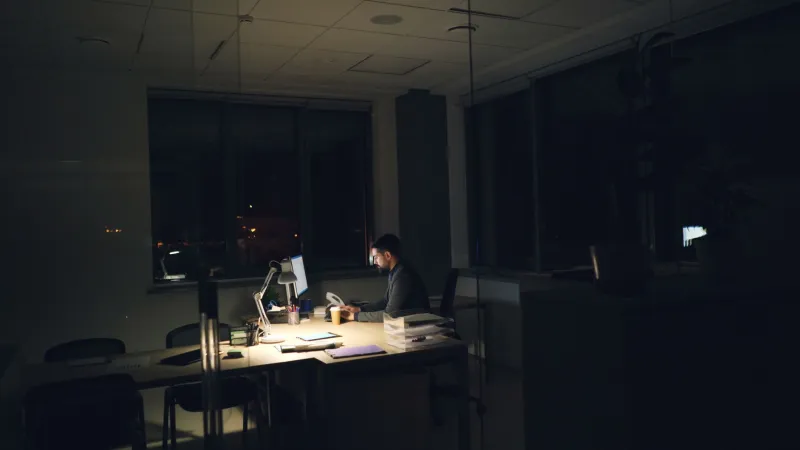
Somewhere in suburban Parramatta, a mild-mannered accountant named Gerald is not Gerald right now. He's SilverDingo_Rex, high-roller, untouchable, a man who does not flinch at a $20 blackjack bet. Gerald will be Gerald again by morning. But for the next two hours, Rex runs the table.
If you've spent any time in Australian online casino circles, you already know that Gerald is not alone. Across the country — from Fremantle to Cairns, from Hobart's quiet suburbs to Melbourne's inner-north share houses — players are constructing elaborate digital alter egos before they even click 'deal'. Funny usernames, invented backstories, poker faces worn not at the table but in the registration form.
So what's actually going on here? Is it harmless fun, a psychological pressure valve, or something worth paying closer attention to?
The Name is the First Costume
It starts innocently enough. You sign up to a new casino platform, and suddenly you're staring at a blank 'username' field. For a lot of Aussie punters, this is where the theatre begins.
Psychologists call it self-categorisation theory — the idea that humans naturally shift between different social identities depending on context. You're one person at the footy, another at a work meeting, and apparently a completely different creature when you're trying to bluff a virtual dealer at 11pm on a Wednesday.
The username becomes the first piece of costume. 'BigRedKangaroo' suggests swagger. 'QuietAcesMelbourne' implies calculation. 'JokerQueen_AU' — well, that one's just got excellent taste. The point is, none of these names are accidents. They're aspirational architecture. Players aren't just naming themselves; they're designing the gambler they want to be.
Escape Hatch or Recklessness Enabler?
Here's where it gets genuinely interesting — and a little thorny.
For plenty of people, the persona is a legitimate escape hatch. Life in Australia is expensive, stressful, and full of obligations. The mortgage doesn't care that you had a rough week. Your boss certainly doesn't. But 'SilverDingo_Rex' doesn't have a mortgage. Rex is free, flush, and fundamentally unbothered.
Researchers who study online behaviour have noted that anonymity can reduce social anxiety and allow people to engage more freely in leisure activities. For introverted Aussies who might feel awkward at a physical casino — the kind where a croupier can see your face when you bust on 18 like an absolute muppet — the online persona provides a genuine comfort layer.
But here's the flip side, and it's worth sitting with: the same psychological distance that makes gaming feel lighter can also make recklessness feel cheaper. When 'SilverDingo_Rex' blows $200 in an hour, it doesn't feel entirely like Gerald's $200. Rex made a call. Gerald just watched. This dissociation — psychologists sometimes call it depersonalisation — can erode the natural brakes that keep spending in check.
It's not that the persona causes problem gambling. But it can grease the slide.
The Backstory Nobody Asked For (But Everyone Secretly Has)
Take a peek at any live casino chat function and you'll find something remarkable: people performing. Not just playing games, but performing a version of themselves.
Some Aussie punters admit — usually anonymously, which is fitting — to having fully fleshed-out backstories for their casino selves. One bloke from Brisbane described his poker persona as 'a retired miner from Kalgoorlie who doesn't care about money anymore'. He is, in reality, a 34-year-old logistics coordinator who very much cares about money. But for three hours on a Friday night, Kalgoorlie Pete lives.
This kind of narrative construction isn't as bizarre as it sounds. Humans are storytelling creatures. We've always used fiction as a way to process reality, explore possibilities, and safely inhabit lives we'll never actually lead. The casino just happens to be a particularly vivid stage.
When the Mask Slips
The trouble arrives when the line between persona and person starts to blur — not just during play, but after.
Some players report that their casino self begins to bleed into their everyday decision-making. The bravado of 'SilverDingo_Rex' makes Gerald more likely to take financial risks in the real world. The emotional detachment cultivated at the virtual tables starts showing up in actual relationships. The compartmentalisation that started as a feature quietly becomes a bug.
This is particularly worth noting for Australian players, given that Australia has one of the highest rates of gambling participation in the world. The cultural normalisation of a punt — the pub parmy and a few bets on the races, the office footy tipping comp — means the boundary between casual entertainment and something more consuming can be genuinely fuzzy.
When you add a fabricated identity into that mix, the fuzzy line gets fuzzier still.
The Jester's Take: Liberating, With Asterisks
Here at Jokaroom AU, we reckon the persona phenomenon is mostly a testament to human creativity and the very Aussie desire to take things just a little less seriously than perhaps we should. If putting on a digital costume makes the game more fun, more theatrical, more yours — that's not nothing.
The jester, after all, has always understood the value of a mask. It's how you say the true things without consequence, how you play without the weight of the whole world watching. There's genuine joy in that.
But the jester also knows — better than anyone — that the mask has to come off eventually. The trick is remembering when.
If your casino persona is a costume you wear for fun and take off when the session ends, brilliant. If it's starting to feel more real than the person who put it on, that's a cue to step back, breathe, and maybe have a yarn with someone you trust — as yourself, username-free.
Play the Character, Not the Stakes
The healthiest approach, according to both recreational players and the occasional psychologist who probably had a very interesting time researching this, is to keep the persona as a character rather than an identity. Know why you created it, know what it gives you, and stay conscious of the gap between the username and the human behind it.
Gerald can absolutely be Rex for a couple of hours. Just make sure Rex isn't making Gerald's financial decisions in the morning.
Now if you'll excuse us, we've got a jester to consult — he goes by a different name after hours, obviously.