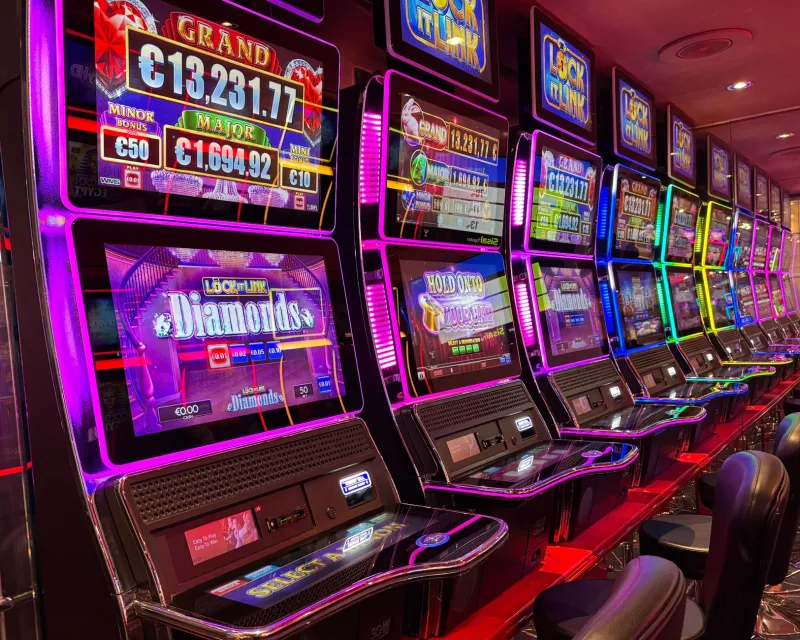
So Close It Hurts: The Neuroscience Behind Why Aussie Punters Can Never Stop at 'Just One More'

It's 11:47pm on a Wednesday. You told yourself you'd stop at ten o'clock. Then ten-thirty. Then 'after this bonus round.' Now you're staring at two matching symbols and a third that stopped — agonisingly — one position short of the payline, and somewhere deep in your chest there's a feeling that can only be described as almost.
You spin again.
Of course you do.
Welcome to the near-miss trap — one of the most elegantly engineered psychological mechanisms in the history of human entertainment, and arguably the single biggest reason why Australians collectively log more hours on online pokies than they ever planned to. The Jester might be laughing, but this time, the joke's genuinely worth understanding.
What Actually Happens in Your Brain During a Near-Miss
Here's where it gets properly fascinating, and a little unsettling. Neuroscientists have known for a while that near-misses — those gut-punch moments where you almost won — don't register in the brain the same way a straightforward loss does. They register more like a win.
Research from the University of Cambridge found that near-misses activate the same reward circuitry — specifically the dopaminergic pathways — that lights up during an actual payout. Your brain, bless its optimistic little heart, interprets 'nearly there' as meaningful feedback. It reads the situation as you're getting warmer, even though in a genuinely random system, you are absolutely, categorically not getting warmer.
The result? Increased motivation to keep playing. A spike in arousal. A narrowing of focus. And a growing conviction — irrational but deeply felt — that the big one is imminent.
Melbourne punter Dan, 34, describes it perfectly: "It's like your brain just refuses to file it as a loss. Two cherries and then the third one ticks past — mate, I'd rather just miss completely. The near-miss makes you feel like you owe yourself another go."
The House Didn't Accidentally Design It This Way
Here's the part where the Jester tips his hat to the engineers. Modern online pokies aren't just electronically randomised versions of the old pub machines. They're products of decades of behavioural research, A/B testing, and genuinely sophisticated psychological architecture.
In most online slots, the virtual reels are weighted. Certain symbols appear more frequently on the visible reels than they actually do in the underlying random number generator. What this means in practice is that high-value symbols are deliberately programmed to appear near the payline more often than pure probability would produce — without ever actually landing on it at the winning frequency that would cost the casino money.
The near-miss, in other words, is not a coincidence. It is a feature.
Regulatory bodies in Australia have grappled with this for years. The Australian Communications and Media Authority and various state gaming commissions have introduced disclosure requirements around return-to-player percentages, but the psychological mechanics of reel weighting remain largely intact across most platforms operating in the grey-market space that many Aussie players frequent.
Why Logic Clocks Off Right When You Need It Most
The cruel irony of the near-miss effect is that it hits hardest precisely when you're already emotionally invested. Cognitive scientists call this the hot-hand fallacy in reverse — instead of believing a winning streak will continue, you start believing a losing streak must turn around.
Sydney player Renee, 41, who describes herself as "someone who definitely knows better," recalls a session that ran two hours longer than intended: "I kept thinking, statistically, it has to pay out soon. I know that's not how it works. I know it. But in the moment, knowing it and feeling it are completely different things."
That gap between knowing and feeling is where casinos live. The prefrontal cortex — responsible for rational decision-making, impulse control, and the kind of sensible inner voice that says mate, go to bed — becomes progressively less effective as emotional arousal increases. The more wound up you get chasing that near-miss, the quieter your logical brain becomes.
Neuroscientist Dr. Luke Clark, whose research at UBC has been widely cited in gambling studies, describes this as a state of "cognitive narrowing" — the world shrinks down to the reels in front of you, and everything else, including time, money, and the fact that you have work tomorrow, fades to background noise.
The 'One More Spin' Economy
It's worth pausing to appreciate just how much money the 'just one more' impulse generates. The Australian gambling industry pulls in somewhere north of $25 billion annually, and a disproportionate chunk of that comes not from people having big planned sessions, but from people who meant to stop and didn't.
The near-miss is essentially a retention mechanism dressed up as entertainment. And it works across every demographic — experienced players, casual punters, people who've read every article about responsible gambling and still find themselves clicking 'spin' at midnight on a school night.
Perth regular Tommo, 28, puts it with characteristic Aussie bluntness: "I've won decent money on pokies before. I know what a win feels like. But the near-miss? That almost feels better in the moment, which is completely cooked when you think about it."
It is completely cooked. And it's by design.
Playing Smarter When Your Brain Is Playing You
None of this means you're a mug for getting caught in the loop — you're human, and your brain is doing exactly what millions of years of evolution wired it to do. Pattern recognition and persistence in the face of near-success kept our ancestors alive. It just wasn't calibrated for a Wednesday night on a platform that's spent twenty years optimising against it.
A few things genuinely help. Setting a hard session limit before you start — not a rolling one you keep adjusting — removes the decision from the emotionally compromised version of you who'll be making it later. Treating every spin as genuinely independent (because it is) rather than part of a narrative arc your brain is constructing (because it's not) takes practice but pays off. And recognising the near-miss for what it is — a designed stimulus, not a signal — gives you at least a fighting chance of clocking off when you meant to.
The Jester, for all his mischief, respects a punter who knows the game they're actually playing. And the game, it turns out, isn't just pokies. It's a negotiation between your rational self and a system built to make irrationality feel like wisdom.
Spin smart. And maybe — just maybe — stop before the next one.