Burning the Candle at Both Ends of the Pokies: The Real Cost of Australia's 2am Casino Sessions
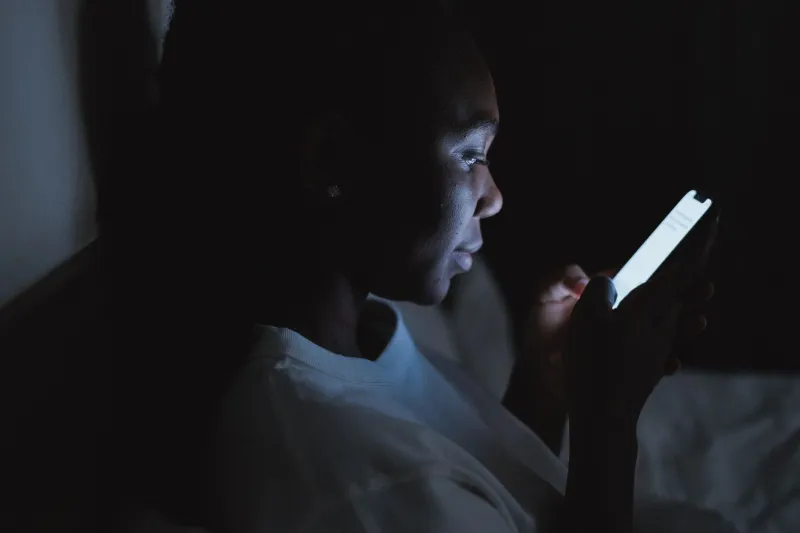
Somewhere in suburban Brisbane, a bloke named Davo is lying in bed, phone screen illuminating his face like a budget lighthouse. His partner is asleep. The dog is asleep. The sensible part of his brain — the part that remembers he has a 7am site start — has apparently also gone to sleep. But Davo? Davo is on a heater. Or so he thinks.
This is not a story about degenerate gambling. This is a story about something far more ordinary, and in many ways far more insidious: the quiet, almost accidental habit of gaming online in the small hours, when willpower has clocked off and the virtual tables are still very much open for business.
The Night Shift Nobody Asked For
Australian online casinos never close. That's the point. Unlike the Crown or The Star, which eventually flick the lights on and shuffle you towards the taxi rank, a digital casino is perpetually, cheerfully available. Midnight? Welcome. Three in the morning? Pull up a chair. The jester is always performing.
And Australians, it turns out, are enthusiastic patrons of the graveyard shift. Research from the Australian Institute of Family Studies has consistently flagged that online gambling — distinct from venue-based gambling — skews heavily towards late-night usage. The reasons are mundane and deeply human: daytime is for work, evenings are for family, and the only truly "free" time many punters carve out for themselves sits in that quiet, slightly lawless zone between 10pm and whenever the guilt kicks in.
For some, it's escapism. For others, it's habit. For a significant chunk, it started as one innocent scroll through the lobby and evolved into something they'd struggle to explain at a reasonable hour.
Your Casino Knows You're Awake
Here's where things get properly interesting — and a little uncomfortable.
Online casinos are not passive entertainment. They are, beneath the cheerful graphics and jester hats, extraordinarily sophisticated data operations. The timing of promotional emails, push notifications, and bonus offers is rarely accidental. Many operators deploy algorithmic systems that track individual usage patterns and time their communications accordingly.
Translation: if you've historically opened the app at 11:30pm on a Wednesday, there's a reasonable chance your Wednesday bonus email arrives around 11:15pm.
Dr. Sally Gainsbury, a gambling researcher at the University of Sydney's Brain and Mind Centre, has written extensively about the way digital interfaces exploit what she calls "moments of low resistance" — periods when users are fatigued, bored, or emotionally vulnerable. Late-night hours tick every one of those boxes simultaneously.
The mechanics are borrowed from social media design: variable reward schedules, progress bars, near-miss notifications. All of it is engineered to feel like it's for you. None of it is for you.
What Your Tired Brain Actually Does at the Tables
Let's talk science for a moment, because this is genuinely fascinating in a mildly terrifying way.
Sleep deprivation — even the mild, self-inflicted variety that comes from staying up two hours past your usual bedtime — measurably impairs the prefrontal cortex, the part of the brain responsible for impulse control, risk assessment, and the kind of rational thinking that goes, "mate, you're down eighty bucks, maybe call it."
At the same time, tired brains show heightened activity in the reward-seeking limbic system. You're simultaneously worse at evaluating risk and more motivated to chase reward. For a casino, this is roughly equivalent to a pub removing all the chairs so patrons drink standing up — it's not a coincidence that it works in the house's favour.
Melbourne-based cognitive psychologist Dr. Tara Hennessy (who has consulted for problem gambling services across Victoria) puts it plainly: "A person making casino decisions at 2am is neurologically a different person from the one who set a budget at 8pm. The 8pm person was sensible. The 2am person is operating on something closer to autopilot."
The upshot? Those late-night sessions where everything feels like it's about to turn around? They're the sessions where you're least equipped to know when to stop.
The Testimonies You'll Recognise
Speak to regular online punters across Australia and the late-night stories emerge with eerie consistency.
There's the Perth nurse who discovered she'd spent $340 on a Tuesday night she barely remembered, the money earmarked for her daughter's swimming lessons. There's the Geelong retiree who describes his midnight sessions as "just something to do" when insomnia strikes — a habit that's run him somewhere north of $4,000 over eighteen months. And there's the young Sydney professional who genuinely believed she was "better" at blackjack after a few drinks and a couple of hours past midnight. (She was not.)
None of these people identify as problem gamblers in the clinical sense. All of them, in retrospect, can see the pattern clearly. The trouble is, patterns are easiest to spot in daylight.
Counting the Actual Cost
The financial damage of late-night gambling is difficult to quantify precisely, because most people aren't keeping receipts. But the Australian Gambling Research Centre has noted that impulsive, unplanned sessions — the kind that happen when you're tired, a bit bored, and your phone is already in your hand — tend to generate significantly higher losses per hour than deliberate, budgeted play.
Beyond the dollars, there's the sleep debt itself. Chronic mild sleep deprivation is associated with reduced productivity, impaired immune function, mood dysregulation, and — here's the kicker — increased susceptibility to further impulsive behaviour. It's a feedback loop. Tired people make worse decisions, including the decision to stay up late, which makes them more tired, which makes their decisions worse.
Add to this the psychological weight of morning-after regret, the low-grade anxiety of checking your banking app before your first coffee, and the creeping suspicion that last night's version of you was a bit of a galah, and you've got a cost that extends well beyond your account balance.
Recognising the Pattern Before the Jester Wins
None of this is intended to be preachy — the Jokaroom jester is fundamentally pro-fun, and there is nothing inherently wrong with enjoying a late-night session. The problem isn't the hour. It's the lack of awareness.
Some practical signals worth taking seriously:
- You can't remember deciding to start playing — it just sort of happened.
- You've moved the goalposts on your session more than once — "just until I win back X" is a classic.
- You're playing faster than you would during the day, clicking through decisions you'd normally pause on.
- You feel vaguely ashamed checking your balance the next morning — that shame is information.
- Notifications are reliably pulling you back in — consider whether the app's notification settings are actually working for you.
Tools like deposit limits, session timers, and self-exclusion options exist on reputable platforms precisely because the industry knows the late-night trap is real. Using them isn't a sign of weakness. It's the 8pm version of you looking out for the 2am version.
The Last Spin Before Bed
Davo from Brisbane, last we checked, eventually put his phone down around 4am. He was up two hundred dollars at one point. He finished the session down sixty-three. He slept through his alarm, missed the first hour of his site start, and drank approximately four coffees before he felt human again.
He doesn't consider himself a problem gambler. He's probably right. But he does consider that particular Tuesday a bit of a waste, in ways that go beyond the sixty-three bucks.
The midnight scroll is Australia's most relatable bad habit — and like most relatable bad habits, it's worth knowing exactly what it's costing you before you decide it's fine.
The jester, for the record, is always awake. The question is whether you should be.
If you or someone you know is concerned about gambling habits, Gambling Help Online offers free, confidential support at gamblinghelponline.org.au or 1800 858 858.